The Rooster: Traits, Roles, and Cultural Significance
Intro
Roosters, often known as the proud crowers of the hen yard, hold a more complex role in the world of poultry than one might think. They do not merely serve as alarm clocks for early risers, but they are integral to the social dynamics and health of a chicken flock. Understanding these birds can offer valuable insights into their responsibilities and unique traits that contribute to both their survival and the culture surrounding chickens in human care. The details of their grooming habits, health considerations, and training practices are not just for show; they reflect the needs and intricacies of their lives as domestic animals.
In this article, we will explore the anatomy of roosters, their vocalizations that resonate beyond mere sounds, and the social structures they uphold within their groups. By embracing the full spectrum of a rooster’s life, we aim to provide clarity on how they interact with hens and humans alike, solidifying their invaluable presence on farms and backyards across the globe.
Preface to Chickens
Chickens have played an elemental role in human society, stretching back thousands of years. These birds are not just common barnyard fixtures; they represent a deep-seated connection between humans and the practices of domestication. With this introductory section, we aim to lay a solid foundation for understanding their significant roles, particularly focusing on roosters—a crucial aspect often overshadowed by hens.
Several factors underline the importance of chickens in both rural and urban environments, and this section will unpack those elements. Chickens, particularly roosters, are vital not only in agricultural systems but also in sociocultural contexts. Examining their characteristics and evolution helps paint a broader picture of how they fit into our lives.
Definitions and Classifications
Understanding chickens starts with grasping what they are on both biological and cultural levels. The domestic chicken, Gallus gallus domesticus, is a subclass of the broader species that encompasses their wild ancestors. The classifications arise from various perspectives—genetic, phenotypic, and ethological. Chickens can be categorized based on different traits such as size, feather patterns, or even the purpose for which they were bred.
- Layers: Chickens bred primarily for egg production.
- Broilers: Chickens bred for meat.
- Cockfighters: Specific breeds, like the Asil or Shamo, have been selectively bred for their abilities in competitive fighting, despite the ethical dilemmas surrounding this practice.
As we delve deeper into the roles of roosters, understanding these classifications enriches our appreciation for their significance in various contexts, from farm life to backyard settings.
Historical Context of Domestication
The domestication of chickens is an intriguing story that began over 8,000 years ago in Southeast Asia and the Middle East. Initially, wild chickens were valued for their meat and eggs, but as societies grew more complex, so did the roles of these birds. Roosters, with their significant vocalizations and assertive behaviors, emerged as symbols of vitality and vigilance. In many cultures, they were revered for their hand in marking the dawn and initiating the day's activities.
As we transitioned from nomadic to agrarian lifestyles, the relationship between humans and roosters became more profound. They took on roles as guardians of the flock, their crow signals not only signaling dawn but also acting as an alert to threats. Historical documentation, such as from ancient China, indicates that the rooster was central in agricultural practices, emphasizing its contributions beyond mere companionship.
In sum, contemplating the definition and historical context of chickens paves the way for a richer understanding of roosters, their characteristics, and their multifaceted roles in agriculture and society. This groundwork will substantially inform the exploration of their physical traits, behavior, and cultural significance as the article unfolds.
"In every bird that crows, there lies a history of companionship and labor that is far from what meets the eye."
For those interested in a more extensive exploration of chicken domestication, references such as Britannica and Wikipedia offer valuable insights.
The Rooster's Role
The rooster stands as a pivotal figure within the chicken community, embodying a blend of strength, responsibility, and social dynamics that are crucial to successful flock management. Understanding the diverse roles a rooster plays not only sheds light on chicken behavior, but it also reveals their significance in agricultural practices and cultural representations. Through their physical attributes to their behavioral traits, roosters contribute meaningfully to the ecosystem of a flock.
Physical Characteristics
Size and Structure
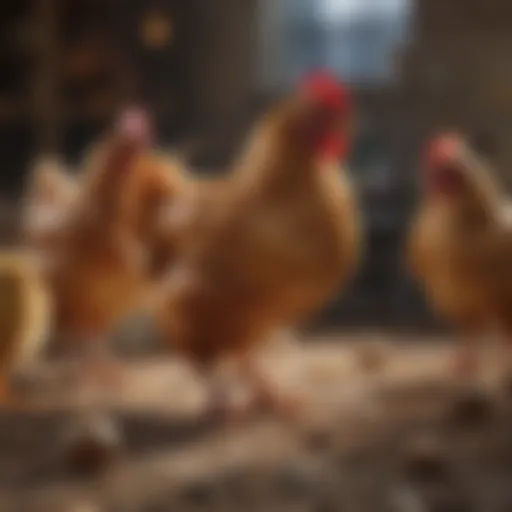
A rooster's size and structure reveal much about its role in the flock. Generally, roosters are larger than hens, which gives them a commanding presence. Their robust body and erect posture make them highly visible, serving as a natural alarm for any potential threats. This physicality is not just for show; it instills confidence in the hens and signals their strength and readiness to protect. The large talons of a rooster also provide practical benefits; they are essential for asserting dominance and can be used effectively against predators. An imposing rooster is often seen as an asset, attracting hens and serving as a breeding choice that ensures strong offspring.
Feather Patterns
The feather patterns of roosters are not purely ornamental; they serve important functions. Unique patterns can indicate health and vitality, allowing owners to gauge a rooster's fitness. Varieties, like the intricate lacing of a Wyandotte or the stunning hues of a Rhode Island Red, can enhance their appeal, both as pets and for parents looking to breed. Feather patterns are also crucial for camouflage; certain designs help roosters blend into their surroundings while they forage or protect their flock, thus providing an advantage over predators.
Color Variations
Color variations in roosters can range from deep blacks and golds to vibrant reds and even speckled shades. These colors are more than mere aesthetics; they reflect genetic diversity and can influence flock dynamics. Colorful roosters tend to attract hens, increasing breeding chances. However, certain breeds might be more susceptible to environmental stresses, where lighter colors may get sunburnt, for instance. This point of differentiation allows chicken owners to select the right rooster for their climate and conditions.
Behavioral Traits
Territorial Displays
Territorial displays are a fundamental aspect of rooster behavior. These behaviors signal to other roosters and potential intruders that this territory is claimed, establishing a pecking order within the flock. A rooster’s distinctive strutting and puffing up can deter rivals and reassure hens of their safety. However, overly aggressive territorial behaviors can lead to unnecessary conflicts, especially in tightly grouped flocks. Striking a balance in territorial displays ensures a harmonious environment for both the rooster and the hens.
Vocal Communications
Vocal communications among roosters serve various purposes, from announcing their presence to calling for mating rituals. The distinct crowing at dawn is often a hallmark of roosters, signaling the start of a new day and serving as a form of natural alarm clock for both chickens and nearby humans. Different calls communicate specific messages—such as alerting of danger with sharp clucks or calling hens for food. A rooster's ability to communicate effectively fosters not only security within the flock but also supports natural social bonds.
Social Dynamics
Understanding the social dynamics within flocks revolves significantly around the role of the rooster. They establish hierarchies and maintain order through subtle interactions, influencing the behavior of hens and other roosters. A rooster that manages social structure well contributes to a peaceful flock, which is essential for overall productivity. Conversely, if a rooster is too aggressive or fails to assert itself, it can lead to chaos within the group, affecting egg-laying and health.
Significance in Flock Management
Protection Duties
One of the most notable responsibilities of a rooster is its duty to protect the flock. Roosters are often seen stepping in front of hens when danger arises. This instinct for protection is vital, particularly among free-range flocks exposed to potential predators. Their vigilant nature and fighting spirit offer security, as a healthy rooster will stand between threats and the hens, ensuring their safety when tragedy looms.
Breeding Insights
When it comes to breeding, the rooster's role is quite significant. Factors like the rooster's health, genetic background, and even behavior can influence the quality of offspring. A strong and healthy rooster not only breeds fertile eggs but can also bring vigor to the next generation. Moreover, breeding practices must consider genetic traits that may be more beneficial for survival and productivity.
Nurturing Relationships with Hens
Roosters do not merely serve a protective function; they also engage in nurturing behaviors. Roosters often engage in courtship displays to strengthen their bond with hens. These behaviors—ranging from gentle clucking to offering food—can create a supportive atmosphere within the flock, as successful breeding relies on positive relationships. The balance between nurturing and assertive behavior nurtures strong family ties that benefit the flock.
Vocalizations of Roosters
The sounds a rooster makes aren't just random clucks and crows; these vocalizations play a crucial role in the life of a flock. They serve various purposes, reflecting the complex social ecosystem within a chicken community. Understanding these vocal sounds provides insights into the behavior and interaction between roosters and their environment, making it an essential topic when it comes to grasping the overall significance of roosters in chicken life.
Types of Calls
Morning Calls
Every morning, just as the sun begins to peek over the horizon, the rooster announces its presence with a distinctive morning call. This call is often one of the first sounds to break the dawn's tranquility. The primary characteristic of the morning call is its loud and resonant crowing, which can be heard from quite a distance. This call signifies the start of a new day, not just for the rooster but for the entire flock.
One of the benefits of these morning calls is that they help to establish a daily routine, which is essential for the behavior of domesticated chickens. By crowing at dawn, the rooster reminds the hens and other flock members that it’s time to wake up, forage, and engage in social behaviors.
Interestingly, the morning call can also be a double-edged sword; while it serves the purpose of waking the flock, it can also attract predators if the sound travels too far.
Alert Calls
Alert calls are a roosters' natural instinct kicking in, serving as a vital communication tool for the entire flock. When a rooster senses potential danger, such as a lurking predator, it issues a special alert call. This call typically has a short, sharp tone that differentiates it from their more melodious morning calls.
The unique feature of an alert call lies in its ability to swiftly capture the attention of all nearby chickens. This immediacy allows hens to seek shelter and stay safe. The distinctiveness of the alert call makes it a beneficial aspect of a rooster's behavior, ensuring the survival of the flock. However, misjudgments can occur; sometimes, the call is triggered by mundane occurrences, which can lead to unnecessary panic among the chickens.

Courting Calls
When it comes to mating, courting calls become prominent during the breeding season. Roosters employ a variety of vocalizations accompanied by specific body movements to attract hens. A key characteristic of these calls is their softer, more rhythmic tone, diverging from the more vigorous morning and alert calls.
Courting calls are beneficial in terms of establishing bonds between roosters and hens, promoting reproductive success within the flock. The unique feature of these calls is how they often evoke a response from the hens, leading them to come closer. This interaction not only strengthens social bonds but also plays a crucial role in the breeding cycle. On the flip side, a rooster that is overly aggressive with its courting—like incessantly calling—might suffer from rejected advances.
Communication with Other Chickens
The dynamics of communication among chickens go beyond just vocalizations. Roosters also engage in non-verbal forms of communication using body language. This consists of postures, movements, and even visual signals to convey messages across the flock.
Non-verbal signals often include puffing up feathers to appear more dominant or bowing slightly to show submission. This multi-layered communication style helps maintain social order and strengthens relationships within the flock.
In summary, the vocalizations of roosters are not merely amusing sounds. They are a language of their own, integral to the social fabric of chicken life. From signaling the start of a new day with morning calls to alerting the flock to danger and courting potential mates, these vocal cues deepen our understanding of the complexities involved in rooster and chicken behavior.
Roosters in Agriculture
Roosters play a pivotal role in the agricultural landscape, influencing both productivity and the emotional connection people have with their environments. While often overshadowed by hens in discussions of poultry farming, these male birds bring unique strengths that benefit farmers and foster a healthier flock. Understanding the contributions of roosters can help us appreciate their place not just in farmyards, but across diverse agricultural practices.
Contribution to Egg Production
The influence of roosters on egg production can be a fine point of confusion. Many assume that only hens bear the responsibility for laying eggs. However, roosters are necessary for the fertilization of eggs, which ultimately supports the continuity of heritage breeds and specific farming goals. For instance, farmers who wish to produce chicks rather than just eggs benefit significantly from having a rooster in their flocks. Not only do these roosters help in reproducing viable eggs, they also enhance flock dynamics. The presence of a rooster can lead to more frequent egg-laying by hens, driven by their natural instincts to nest and rear young. Hence, in settings prioritizing sustainable agriculture and natural breeding practices, the rooster’s role becomes undeniably valuable.
Economic Impact
The significance of roosters in the agricultural economy can sometimes be overlooked. However, they are essential players who directly affect the profitability of poultry farming. Among various factors contributing to economic impact, two major ones stand out: the market demand for heritage breeds and the functional role roosters occupy within the poultry industry.
Market Demand for Heritage Breeds
In recent years, there has been a resurgence in interest for heritage chicken breeds. This trend has created a marked increase in the market demand for those robust, often non-hybrid varieties of chickens. Heritage roosters are particularly sought after for their genetic diversity, unique traits, and ability to graze and forage effectively. One standout characteristic of these birds is their adaptability to local conditions, making them a solid choice for smallholders, farmers, and hobbyists alike. By choosing heritage breeds, farmers are also connecting consumers to traditional practices, leading to increased customer awareness about food sources and animal welfare. However, while the demand for these breeds highlights a shift towards mindful consumption, it may also bring challenges in ensuring proper breeding practices to maintain the integrity of these lineages.
Role in Poultry Industry
Roosters hold substantial influence over the poultry industry, and their role can be defined by both functionality and traditional significance. From leading flocks to protecting against predators, these birds embody numerous essential traits that enhance farming efficiencies. Their ability to maintain order among hens and alert the flock of threats adds a layer of cohesion and safety invaluable to farmers. Moreover, the cultural and historical ties associated with roosters often encourage consumers to seek out ethically raised poultry. This brings a dual benefit: rooster-friendly farming practices can reflect positively on a brand and establish stronger market positions. However, as the industry evolves, balancing the desires of consumers with the practicalities of agriculture will require ongoing dialogue and responsible practices.
"Roosters are not just mere companions to hens; they are the heartbeats of an agricultural ecosystem that thrives on natural dynamics."
Focusing on these aspects showcases the multifaceted role roosters play in agricultural systems, pointing toward their inherent value in food production and cultural significance.
Cultural Significance of Roosters
Roosters, often seen strutting about farms and backyards, hold much more than just culinary importance. Their rich symbolism and presence in various cultures highlight a deeper connection between avian life and human perception. This section unpacks the layers of cultural significance that roosters possess, exploring how they serve as potent symbols in different societies.
Symbolism in Various Cultures
Across the globe, roosters are cloaked in layers of meaning that echo in traditions, art, and everyday life. Here are a few notable representations:
- Courage and Bravery: In many cultures, the rooster is emblematic of courage. Its crowing heralds the dawn, serving as a symbol of vigilance and awakening. This idea may stem from the rooster's role as a protector of its flock, bravely defending hens against threats.
- Luck and Prosperity: In Eastern cultures, such as in China, the rooster is associated with fortune and good luck. During the Chinese Zodiac, the Year of the Rooster is celebrated with festivities that invoke positive energy and success. The bright colors and crowing also symbolize awakening fortune, suggesting that a new day brings new possibilities.
- Masculinity and Leadership: Historically, roosters have been viewed as symbols of masculinity and authority. Their assertive behavior, particularly the crowing at dawn, echoes a leader rallying the troops. This has seeped into various proverbs and idioms that further affirm the rooster's role as a male figure of strength.
- Divine Connection: In ancient civilizations, roosters were often associated with deities. For instance, the Greeks connected the rooster with Apollo, the sun god. Its dawn call was seen as a tribute to the sun's rise, tying it directly to divine acknowledgment.
These symbols demonstrate that roosters are not just farm animals but carriers of cultural narratives that serve to navigate human experiences.

Roosters in Folklore and Mythology
Roosters have also made significant appearances in folklore and mythology, lending their vibrant presence to tales that captivate imaginations. Here are some examples:
- The Tale of the Rooster and the Fox: This popular fable portrays the rooster as a wise and clever character. In this story, the fox attempts to trick the rooster into leaving its perch, playfully illustrating themes of wit over cunning.
- The Moons and Roosters: Some cultures possess myths where roosters are credited with bringing light to the world. For instance, it’s said that the rooster’s crow was the first sound heard at dawn, signaling the end of darkness and the arrival of light.
- Native American Legends: Among various Native American tribes, roosters are associated with storytelling and the passage of seasons. In these tales, colorful roosters are believed to carry the sun with their wings, marking the transitions between day and night, and summer and winter.
This blend of myth and reality showcases how roosters become central figures that carry significant cultural weight, illuminating the ways people interpret their environment and existence.
"The rooster does not hold his head high simply to show off; he does so to face the challenges of dawn."
Encapsulating their traits, folklore, and symbolic presence, roosters resonate with a certain charm that crosses boundaries. Their cultural significance enriches our understanding of how life, nature, and mythology intertwine, ultimately reflecting the complex relationship that humans have with the animal kingdom.
For further reading on the cultural aspects of roosters, consider visiting Britannica on Roosters or Wikipedia's overview.
Challenges Facing Roosters
The challenges that roosters encounter today are important within the scope of this article because they shed light on the complex relationship between humans and poultry. As essential figures in backyard flocks and in commercial poultry production, understanding these challenges can inform management practices and contribute to better welfare for the birds. Several factors contribute to their plight, and by exploring these elements, we can gain insights into how to support roosters more effectively.
Issues of Overpopulation
Overpopulation poses significant issues for roosters in various environments. Many fowl enthusiasts enjoy keeping roosters, but often, they may not consider the implications of housing multiple males.
- Behavioral Conflicts: Roosters are inherently territorial. When multiple males live in close quarters without sufficient space, it can lead to aggressive confrontations. Dominance struggles may result in injury or stress, impacting their health and well-being.
- Breeding Surplus: In many instances, a disproportionately high number of roosters is kept compared to hens. This surplus doesn’t just create competition for resources; it can also lead to negative outcomes in breeding scenarios. Too many roosters can cause hens to get overwhelmed by excessive mating attempts, yielding a stressful situation.
- Rescue and Rehoming Struggles: Animal shelters and rescues often report that a sizeable portion of intake is comprised of roosters. Due to local laws and housing situations, many people find themselves unable to keep roosters, leading to overcrowding in rescue facilities. This situation can strain resources and affect the welfare of the chickens waiting for new homes.
Rooster Restrictions in Urban Settings
In urban areas, the keeping of roosters is commonly regulated or outright banned. Certain considerations contribute to these restrictions, making it difficult for city dwellers to maintain these birds.
- Noise Complaints: Roosters are known for their vocal nature, especially during dawn. Their crowing can become a nuisance in densely populated neighborhoods. As a result, many municipalities enforce stringent noise ordinances, restricting or banning roosters to mitigate complaints from neighbors.
- Space Limitations: Urban living often means limited yard space, making it challenging to provide adequate living conditions for roosters. The necessity for space not only relates to their comfort but also to the management of their social hierarchies. Without proper space, aggressive behaviors may escalate.
- Local Regulations: Various cities have distinct guidelines for poultry keeping, which can inhibit the keeping of roosters. Understanding these regulations can save potential keepers from legal troubles and ensure that they are compliant with local ordinances.
"Understanding the various challenges faced by roosters offers invaluable insight into their care and management, which can enhance their quality of life."
These issues of overpopulation and regulatory restrictions remain central to the discussions surrounding rooster welfare and management. By addressing these challenges, we can work towards more harmonious relationships between roosters and their human caregivers, fostering environments where both can thrive.
For further reading on city chicken regulations, consider exploring the resources available at American Veterinary Medical Association or your local government website.
Finale
In wrapping up our exploration of the various dimensions of roosters, we find ourselves not just at the end of a discussion but at a pivotal point of understanding these remarkable creatures. This section is crucial as it synthesizes the diverse insights we've gathered, highlighting the essential traits that make roosters an integral part of chicken life and the broader agricultural landscape.
Summary of Key Insights
Throughout this article, we have uncovered several key aspects of roosters. Their striking physical characteristics — from vibrant feather patterns to their imposing stature — set them apart within the flock. Behaviorally, they exhibit complex social dynamics. Their territorial displays and unique vocalizations serve not only to communicate with other chickens but also signify their role within the confine of their environment.
- Physical Traits: Roosters are characterized by strong, muscular builds and vibrant plumage. Different breeds exhibit variations in feather patterns and colors, each adding to the visual tapestry of farm life.
- Behavioral Patterns: Their demeanor ranges from protective and assertive to nurturing. They guard the flock and participate in breeding, ensuring the stability and growth of their community.
- Cultural Significance: Beyond their role on the farm, roosters have cultural bearings, symbolizing vigilance and awakening in many societies, and occupying a prominent place in folklore and myths.
"Roosters are not mere farm animals; they are visual and symbolic anchors in the tapestry of human culture."
Future Perspectives on Rooster Management
Looking ahead, effective management of roosters requires a multifaceted approach. As the needs of poultry farming evolve, so too must our strategies. Ensuring that roosters thrive is paramount to maintaining a healthy flock. This not only involves optimal breeding practices but also adapting to changing agricultural protocols and ethical considerations.
- Encouraging Biodiversity: As market preferences shift toward heritage and local breeds, fostering diversity within poultry management will be increasingly important. Using roosters of varied breeds can enhance genetic health and resilience against diseases.
- Urban Integration: With more individuals choosing to keep chickens in urban settings, there must be thoughtful discussions about rooster management that respect local ordinances while acknowledging the benefits these birds bring to urban ecosystems.
- Education and Resources: As interest in backyard poultry farming expands, providing educational resources on best practices for rooster management will be key. Extensions and workshops from agricultural institutions can help inform and empower chicken owners.
In summary, the journey of understanding roosters and their roles is ongoing. As we learn more about these creatures, we can better appreciate their place in our environments, both rural and urban. Recognizing and responding to the challenges they face will ensure their futures in our lives remain secure.